Paper Delivery Boy
- 4.4
- Rating
- 10.00M
- Installs
- Free
- Price

 Analysis by App-foxy
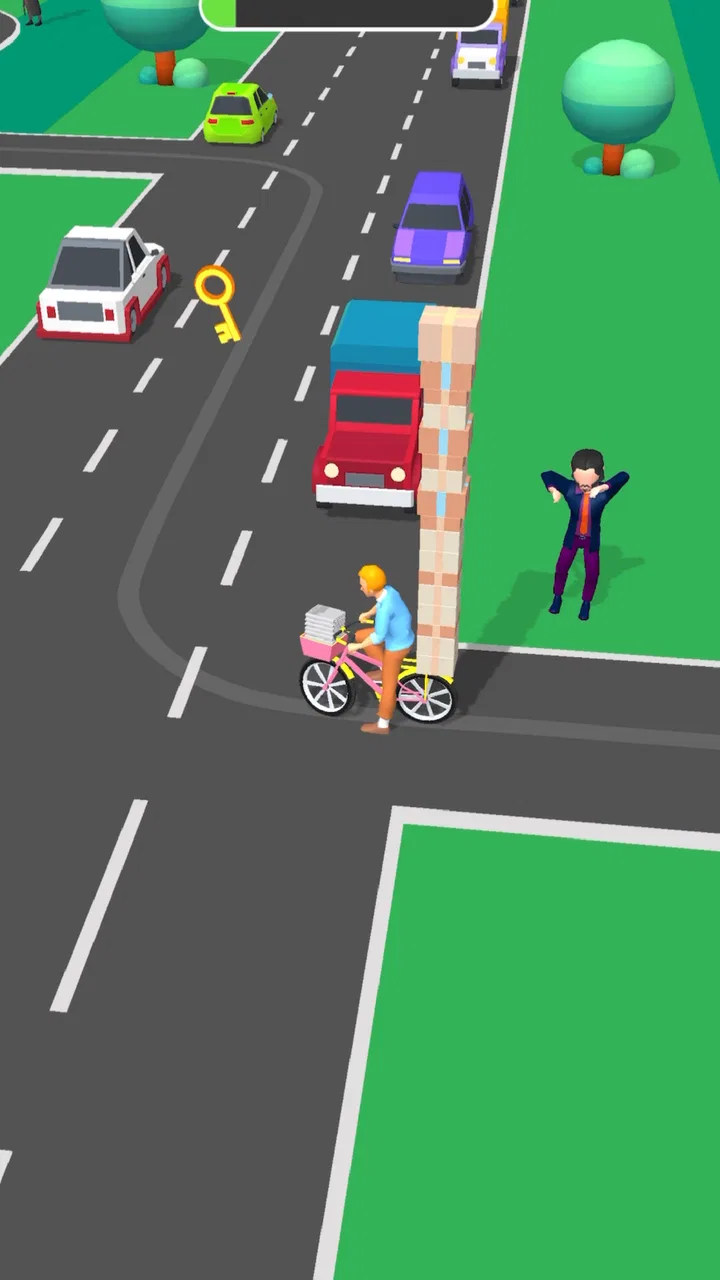
Paper Delivery Boy turns a very ordinary job into a quick arcade challenge: I ride a bicycle through neighborhood streets, deliver papers and packages, and try to avoid whatever danger gets in the way. That simple idea is the whole appeal. It is easy to understand within seconds, but the short delivery runs create a steady rhythm of movement, timing, and recovery that makes the game surprisingly suitable for brief breaks.
After spending time with it, I see it as a casual game rather than a deep simulation. The bicycle is not there to teach realistic riding or route planning. It is a tool for keeping momentum while I react to hazards and complete deliveries. That distinction matters, because players looking for a large world, detailed customization, or a long story will probably find the experience too light. Players who want a straightforward arcade diversion may find the focus refreshing.
The game is free to download, is rated for Everyone, and comes from Supercent, Inc. Its broad audience is reflected in its strong reception: it holds a 4.4 average from around 212 thousand ratings and has passed 10 million installs. Those figures do not make it automatically perfect, but they do fit my impression that this is designed for immediate, low-pressure access rather than a specialized audience.
You May Also Like

 Blood Strike: 2.5 Anniversary
Blood Strike’s Loadouts Turn Every Drop Into a Tactical Gamble
A close look at Blood Strike’s custom loadouts: how fast access to signature weapons reshapes its battle royale rhythm, rewards preparation, and narrows the gap between fights.

 Pandora - Music & Podcasts
Pandora’s Music Is Easy to Start, but Harder to Recover
Pandora’s strength is its low-effort path from a seed to a station. Its weak spot is how much confidence it asks you to place in connection, setup, and quiet recovery.

 8 Ball Pool
 Is Built on Rivalries, Rematches, and Routine
A close look at the rivalries, rematches, shared routines, and unanswered safety questions that turn a quick pool match into a persistent mobile community.

 Samsung Music
’s Quiet Strength Is Playing What You Already Own
Its reach comes less from spectacle than from dependable access to a personal library. That simplicity is both the app’s strongest retention engine and its ceiling.

 AccuWeather: Weather Radar
AccuWeather Review: A Quick, Clear Forecast for Everyday Decisions
For everyday plans, the best forecast is the one you can understand quickly. AccuWeather makes rain timing, radar, and local conditions easy to act on, with a few trade-offs.

 Hill Climb Racing
Why Hill Climb Racing Still Turns Crashes Into One More Run
A tiny car, a bumpy hill and one more upgrade: Hill Climb Racing keeps resurfacing because its simple chaos makes every near-miss feel personal.
More From Our News Desk



Why the delivery ride is the real hook
The most important capability here is the combination of riding and delivering. Many arcade games ask me to survive an obstacle course, collect items, or reach a finish line. This one gives the movement a small purpose: I am not simply traveling through the neighborhood, I am trying to complete a delivery while staying out of trouble. That extra objective makes each run feel more directed.
In practice, the delivery task changes how I look at the road. A danger is not just something that interrupts movement; it threatens the result of the run. I have to think about keeping the bike under control while also paying attention to where the next delivery belongs. The result is a gentle form of multitasking. It is not complicated enough to become exhausting, but it gives the ride more personality than a basic endless obstacle course.
I especially like that the premise is readable without a tutorial-heavy setup. Someone can pick up the phone, understand the fantasy of being a neighborhood courier, and start playing without learning a complicated ruleset. That makes it a good choice for a few minutes in a waiting room or during a commute break, provided the player is comfortable with a game built around repeated short attempts.
The delivery objective gives every obstacle a consequence. That is the feature I would focus on when recommending it. The game is not strongest because it recreates newspaper work. It is strongest because the delivery theme gives its simple arcade movement a reason to continue.
What a typical session feels like
When I begin a run, my attention quickly settles into a practical loop: move through the area, watch for danger, and keep the delivery going. The controls and goals are approachable enough for casual play, so I do not need to prepare mentally as I would for a strategy game or a precision platformer. The challenge comes from staying alert, not from memorizing a large set of systems.
That makes the game comfortable for players who prefer immediate feedback. I can tell when I have made a poor decision because the ride is disrupted or the delivery is put at risk. Short feedback loops are useful on mobile, where I may not have the time or patience to wait through long introductions before reaching the interesting part.
At the same time, this structure can become repetitive. The same basic idea that makes the game accessible also limits its depth. Once the novelty of being a bicycle delivery rider fades, the experience depends on whether avoiding danger and completing another run remains satisfying for me. I would not install it expecting a constantly expanding adventure.
Using the game as a short-break arcade title
My preferred way to play is in small sessions. Paper Delivery Boy works well when I want something more active than scrolling but less demanding than a competitive multiplayer game. I can start quickly, concentrate on the current ride, and stop without feeling that I have abandoned a complicated campaign.
It is also suitable for introducing a younger player to arcade games because of its Everyone content rating and uncomplicated premise. I would still keep an eye on in-app purchase settings on a shared device. The game itself is free, while optional purchases range from $0.99 to $10.99 per item, so a child using a family phone should not be left to explore payment prompts without supervision.
The current version is 1.37.0 and the game requires Android 6.0 or later. That makes it accessible on many older Android devices, although actual comfort will still depend on the phone’s performance and screen responsiveness. I would check the device before recommending it to someone using very old hardware, especially if they already experience stuttering in other games.
The everyday situation where it makes the most sense
Imagine waiting for a friend who is running late. I would rather play a focused arcade run than open a game that requires remembering a quest, managing a team, or committing to a long match. Paper Delivery Boy fits that moment because the premise is immediately clear and the delivery ride gives me something specific to concentrate on.
It also works after a long day when I want light interaction without a demanding story. The neighborhood setting and courier role make the session feel more purposeful than tapping through a completely abstract score attack, but the game does not ask me to invest emotionally in characters or plot. That balance is useful for casual players who want a little activity, not another major hobby.
For a parent, the same quality can be a benefit and a limitation. The accessible rating and simple concept make it easy to understand, but the free-to-play structure means I would review purchase controls before handing over the phone. For an adult who dislikes spending, the game can still be worth trying at no download cost, though the temptation of optional items may affect how comfortable the experience feels.
Where the delivery focus helps and where it falls short
I find the delivery focus most useful when it gives a short ride a clear purpose: I can concentrate on getting the job done rather than treating every hazard as an abstract obstacle. It also makes the game easier to recommend to someone who wants a simple, self-contained arcade task. In the next section, I’ll look at how that focused premise compares with other ways of spending a quick mobile break.
Why it feels more engaging than a plain obstacle run
The delivery theme creates a clear mental target. When I am riding, I am not only asking whether I can avoid danger; I am asking whether I can finish the job. That small change helps the game feel less like a technical test and more like a compact task. It is a useful design choice because the underlying action remains easy to grasp.
The theme also supports a natural sense of urgency without requiring a complicated narrative. A package or paper route implies that I should keep moving, while the hazards provide the pressure. I can understand the situation through the action itself. This is one reason I think the game is better suited to casual players than to people who need a detailed story to maintain interest.
Another strength is the low barrier to entry. I do not need prior knowledge of arcade conventions, and the delivery premise is recognizable. Someone who normally avoids games with fantasy combat or elaborate menus may be more willing to try a bicycle courier challenge. That makes it a useful recommendation for a mixed group of players.
The tradeoff between accessibility and depth
The same simplicity can become the game’s main weakness. Compared with a full racing game, it offers less emphasis on vehicle tuning, track mastery, and competitive lap performance. Compared with an endless runner, its delivery framing gives more purpose, but it may not provide the same variety that keeps a player engaged for long sessions. Compared with a story-driven adventure, it is much easier to start but far less substantial.
I would also avoid describing it as a realistic delivery simulator. The fantasy is about the recognizable job, not about inventory management, navigation logistics, customer communication, or traffic rules. If those details are what attract you to courier games, this will feel too simplified. Its success depends on accepting the arcade interpretation from the beginning.
Free-to-play design is another consideration. The download price is zero, which is convenient, but optional purchases can change how some players approach progression or convenience. I do not think that automatically disqualifies the game, yet I would recommend treating purchases as a separate decision rather than assuming that every useful part of the experience must be bought.
There is also a limit to how much concentration the game demands. That is positive when I want a relaxed break, but negative if I am searching for a serious skill challenge. Players who enjoy highly precise controls, ranked competition, or complex strategy may outgrow it quickly. In that case, a dedicated racing, runner, or action game would probably offer a more rewarding long-term target.
Small habits that make the rides easier
I found it helpful to watch the path ahead rather than react only to the nearest danger. Because the delivery goal encourages forward momentum, late reactions can turn a manageable obstacle into a failed run. Keeping my attention slightly ahead gives me more time to choose a safe line and prevents frantic corrections.
I also recommend treating each attempt as a short exercise in consistency instead of chasing a perfect ride immediately. The game’s appeal comes from repeating the route and improving my decisions. If I focus only on speed, I am more likely to make a careless movement and lose the delivery. A steadier approach usually feels better than rushing through every section.
On a phone with a smaller screen, I would play with the display clean and my hands positioned so they do not cover the central action. That sounds obvious, but mobile arcade games are especially sensitive to blocked visibility. A comfortable grip matters more here than it would in a turn-based title, because a moment of obscured view can affect the entire delivery.
For younger players, I would explain the objective in plain language: complete the delivery first, then worry about going faster. That advice helps them understand the tradeoff between safe movement and risky shortcuts without turning the game into a lecture. It also makes the courier theme more meaningful than simply telling them to avoid obstacles.
Who will get the most from it
I would recommend Paper Delivery Boy to someone who enjoys casual arcade games with a clear task and quick sessions. It is particularly suitable for players who like the idea of moving through a neighborhood, dealing with hazards, and finishing a small job without learning a large collection of mechanics. The delivery role is the reason to choose it over a completely abstract reflex game.
It is also a reasonable option for families looking for an approachable game rated Everyone, as long as in-app purchases are handled responsibly. The free entry point makes trying it easy, and the basic concept is simple enough to explain. I would not present it as an educational tool or a realistic work simulation, but it can be a harmless way to practice attention and timing.
People who should skip it are those who need deep progression, extensive customization, or a strong narrative. I would also steer away players who dislike repeating short arcade attempts or who want a game that can occupy them for long, varied sessions. The central delivery ride is clear and appealing, but it is not designed to satisfy every kind of mobile player.
Compared with the usual endless runners, I prefer its sense of purpose, but someone who values constant novelty may prefer the broader variety of another runner. Compared with racing games, this is less about vehicle performance and more about completing a route safely. Compared with simulation games, it is quicker and friendlier but far less detailed. Choosing it comes down to whether the delivery idea improves the simple action for you.
My final recommendation
After trying it, I see Paper Delivery Boy as a focused, approachable arcade game built around one effective idea: make the player feel responsible for getting a delivery through a dangerous route. That capability does not transform it into a deep simulation, but it gives ordinary obstacle avoidance a little context and makes short sessions more satisfying.
Supercent, Inc. has kept the concept easy to approach, which is why I can imagine recommending it to a friend who wants something quick and uncomplicated. The free model lowers the risk of trying it, while the Everyone rating broadens its audience. I would simply be mindful of optional purchases and realistic about the amount of variety a lightweight arcade game can provide.
My honest advice is to try it when you want a brief, purpose-driven ride, not a full delivery career. If the pleasure of completing one more route and avoiding one more danger sounds appealing, it is a good fit. If you need a detailed world, competitive depth, or a long-term progression system, another game in the racing or simulation space will serve you better.
FAQs for Paper Delivery Boy
01What is the main objective of Paper Delivery Boy?
Paper Delivery Boy is a fun and engaging game where players assume the role of a paper delivery person. The main objective is to deliver newspapers to subscribers while navigating through various obstacles and challenges in the neighborhood. Players must aim for speed and accuracy to earn the highest scores.
02Is Paper Delivery Boy free to play, or are there in-app purchases?
Paper Delivery Boy is free to download and play. However, it offers in-app purchases that allow players to enhance their gaming experience. These purchases might include power-ups, additional levels, or cosmetic enhancements. Players can enjoy the game without spending money, but purchases can provide an advantage.
03What are the system requirements for Paper Delivery Boy on Android and iOS?
For Android, Paper Delivery Boy requires version 5.0 (Lollipop) or higher, ensuring compatibility with most modern devices. On iOS, it requires iOS 11.0 or later. Both platforms need sufficient storage space and a stable internet connection for optimal performance, especially for downloading updates and accessing online features.
04Does Paper Delivery Boy have offline gameplay?
Yes, Paper Delivery Boy offers offline gameplay, allowing users to enjoy the game without an internet connection. However, certain features, like leaderboards or multiplayer modes, might require an internet connection. Offline play is perfect for those on the go or with limited data access.
05Are there any parental controls in Paper Delivery Boy?
Paper Delivery Boy includes parental controls to ensure a safe environment for younger players. Parents can manage in-app purchases and adjust settings to limit screen time. The game is designed to be family-friendly, with content suitable for all ages, but these controls provide additional peace of mind.
Pros
- Engaging gameplay with intuitive controls.
- Retro graphics that enhance nostalgia.
- Challenging levels that keep you hooked.
- Smooth performance with no lag issues.
- Regular updates with new content.
Cons
- Limited customization options for characters.
- Can become repetitive over time.
- Ads can disrupt the gaming experience.
- Requires in-app purchases for faster progress.
- Occasional crashes on older devices.

Paper Delivery Boy
Gallery